
Biofouling Management Plans: What Australian Authorities Expect
Under the Australian Biofouling Management Requirements for Commercial Vessels (ABFMR-CV), all foreign-flagged vessels entering Australian waters must carry two documents: a Biofouling Management Plan (BMP) and a Biofouling Record Book (BRB). DAFF biosecurity officers can request both at any port of entry.
Biofouling Management Plan (BMP)
A vessel-specific document covering anti-fouling coating details, in-water cleaning history, and niche area management — sea chests, bow thruster tunnels, rudder gaps, and shaft brackets. It must also define crew responsibilities and procedures for responding when biofouling exceeds acceptable levels. A generic or vessel-class BMP is not accepted.
Biofouling Record Book (BRB)
An ongoing log where every hull inspection and underwater cleaning event is recorded — date, location, method (diver-assisted or ROV), areas covered, Biofouling Risk Level (BRL) assigned, and service provider details. Underwater photo and video records must be attached to each entry as evidence.
⚠️ Incomplete BRB entries or cleaning gaps exceeding 30 days in tropical waters are the most common triggers for mandatory in-water treatment upon arrival in Australia — at the operator's cost.
Niche Areas: The Most Commonly Failed Inspection Points
Niche areas are recessed or internal hull surfaces that anti-fouling paint cannot fully protect and that standard hull cleaning often misses. DAFF inspectors specifically target these zones because they harbour the highest-risk biofouling. The most commonly failed areas are:
- Sea chests: internal grating surfaces accumulate heavy shellfish and algae growth that is invisible from outside the hull
- Bow thruster tunnels: sheltered geometry allows barnacles and mussels to establish quickly, even on recently cleaned vessels
- Rudder gaps and pintles: narrow clearances trap soft and hard fouling that brushcart equipment cannot reach
- Shaft brackets and rope guards: frequently overlooked during routine cleaning and rarely documented in the BRB
- Dry dock blocks and keel areas: contact points from the last dry dock that may carry live organisms
Each of these must be individually cleaned, inspected, and documented with photographic evidence before arrival in Australia.
How Oceanus Marine Supports Compliance
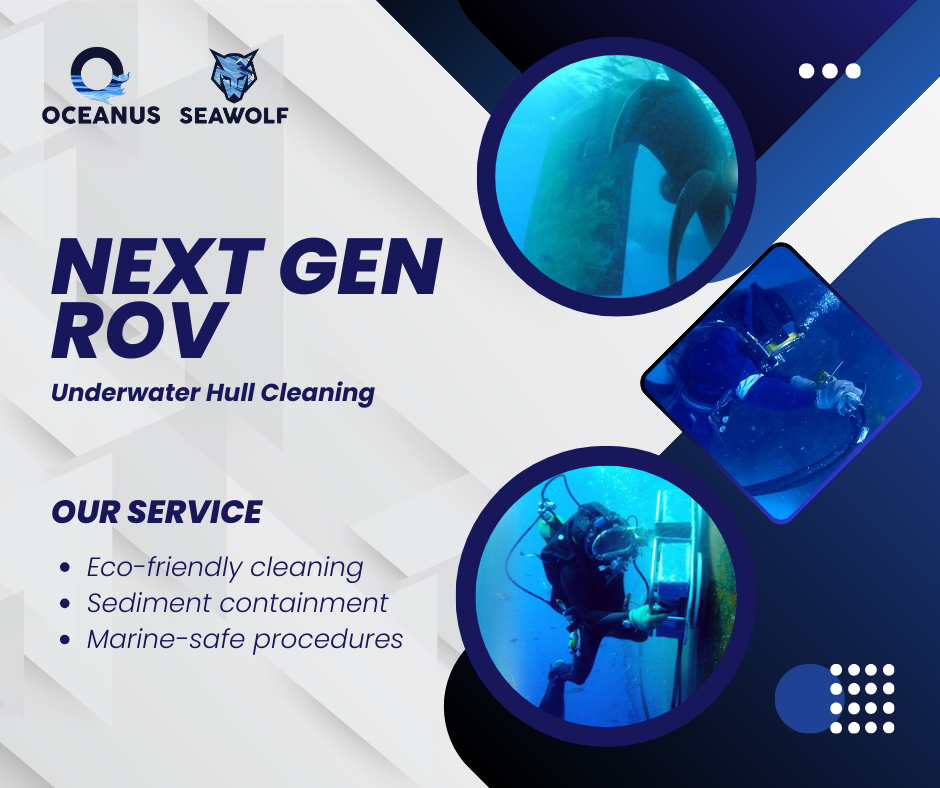
Oceanus Marine carries out full Australia standard hull cleaning and inspection in Singapore — covering main hull, sea chests, and thruster tunnels — and provides signed service records and photo documentation ready for BRB submission.
📞 Contact Oceanus Marine to arrange pre-departure hull cleaning for Australia-bound vessels in Singapore.
.png)
.png)
.png)